

AI is rapidly transforming modern software infrastructure. While AI is often associated with chatbots or generative models, one of its most significant impacts is happening behind the scenes — within DevOps and cloud engineering.
As applications scale across distributed cloud environments, traditional DevOps practices are increasingly being enhanced by intelligent systems capable of predicting failures, optimizing resources and automating operational decisions.
This shift is giving rise to what many refer to as ‘AI-driven DevOps’ or ‘AIOps’, where ML helps engineering teams manage complex systems more efficiently.
The Growing Complexity of Cloud Systems
Modern applications rely on microservices, containerization and orchestration technologies to operate at scale. Tools such as ‘Docker’ and ‘Kubernetes’ have become foundational components of cloud-native platforms.
These technologies allow applications to scale dynamically, but they also introduce operational complexity. A single distributed system may contain hundreds of services generating massive volumes of logs, metrics and telemetry data.
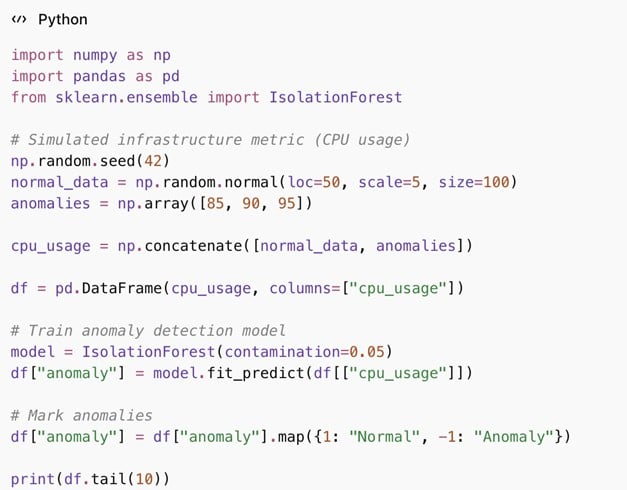
For DevOps teams, manually monitoring these signals can quickly become overwhelming.
Traditional rule-based monitoring systems often struggle to detect subtle anomalies or predict system failures before they occur. As infrastructure grows more complex, organizations are increasingly turning to AI-driven operational intelligence.
AIOps: Bringing Intelligence to Operations
AIOps applies ML techniques to operational data such as logs, system metrics, traces and infrastructure events.
Instead of relying only on predefined thresholds, AI models learn normal patterns in system behavior and automatically detect anomalies.
For example, an AI model monitoring infrastructure metrics may detect unusual latency spikes or resource consumption patterns. Rather than waiting for a full outage, the system can alert engineers or automatically trigger scaling actions.
This proactive approach shifts DevOps from reactive incident management toward predictive infrastructure operations.
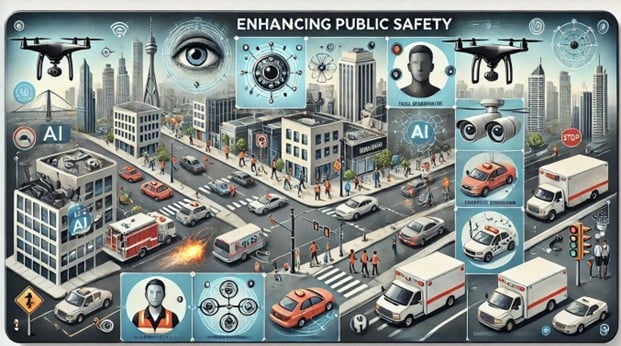
Real-World Experience: AI in Public Safety Infrastructure
The value of AI-driven operations becomes especially clear in mission-critical environments.
In one public safety platform I worked on, the system processed large volumes of real-time telemetry data from distributed IoT devices. The infrastructure relied on containerized services orchestrated through Kubernetes, allowing the platform to scale dynamically as new devices connected to the network.
However, as data streams increased, traditional monitoring tools began producing large numbers of alerts without clearly identifying the root cause of performance issues.
To address this challenge, ML-based anomaly detection models were introduced into the operational pipeline. These models analyzed infrastructure metrics and device telemetry patterns to detect unusual system behavior.
This allowed the system to automatically trigger scaling policies and notify engineers before system performance degraded. In environments such as public safety monitoring, where reliability and response time are critical, AI-driven operational intelligence can significantly improve system resilience.
AI for Infrastructure Optimization
Beyond monitoring, AI is also improving how infrastructure resources are allocated and optimized.
Cloud platforms often run with over-provisioned resources to avoid performance issues. While this improves reliability, it can also lead to inefficient resource utilization.
ML models can analyze historical workload patterns and recommend optimal infrastructure configurations. These systems can support:
- Predictive autoscaling based on demand patterns
- Intelligent workload scheduling across clusters
- Resource allocation optimization
This enables organizations to maintain high system performance while reducing infrastructure costs.
The Future: Autonomous Infrastructure
The long-term vision for AI-driven DevOps is autonomous infrastructure.
In this model, cloud platforms continuously monitor their own operational behavior and automatically apply corrective actions when anomalies occur.
Examples of emerging capabilities include:
- Self-healing infrastructure that replaces failing nodes
- Predictive scaling before traffic surges occur
- Automated root cause analysis across distributed systems
While fully autonomous infrastructure is still evolving, many organizations are already implementing early forms of these capabilities.
Preparing for an AI-Driven DevOps Era
As AI becomes embedded in DevOps workflows, engineers will need to expand their expertise beyond traditional infrastructure management.
Future DevOps professionals will increasingly work at the intersection of:
- Cloud infrastructure engineering
- Data pipelines and observability systems
- ML for operational analytics
Engineers who combine knowledge of distributed systems with AI-driven analytics will play a key role in building the next generation of intelligent platforms.
Conclusion
DevOps is entering a new phase where AI enhances how infrastructure is monitored, optimized and maintained.
By applying ML to operational data, organizations can detect issues earlier, automate responses and build more resilient cloud platforms.
Rather than replacing engineers, AI will empower them to design smarter systems capable of operating efficiently at scale.
As cloud environments continue to grow in complexity, AI-driven DevOps will become an essential foundation for modern software infrastructure.