It’s hard to find a team today that isn’t talking about agents. For most organizations, this isn’t a “someday” project anymore. Building agents is a strategic priority for 95% of respondents that we surveyed across the globe with 800+ developers and decision makers in our latest State of Agentic AI research. The shift is happening fast: agent adoption has moved beyond experiments and demos into something closer to early operational maturity. 60% of organizations already report having AI agents in production, though a third of those remain in early stages.
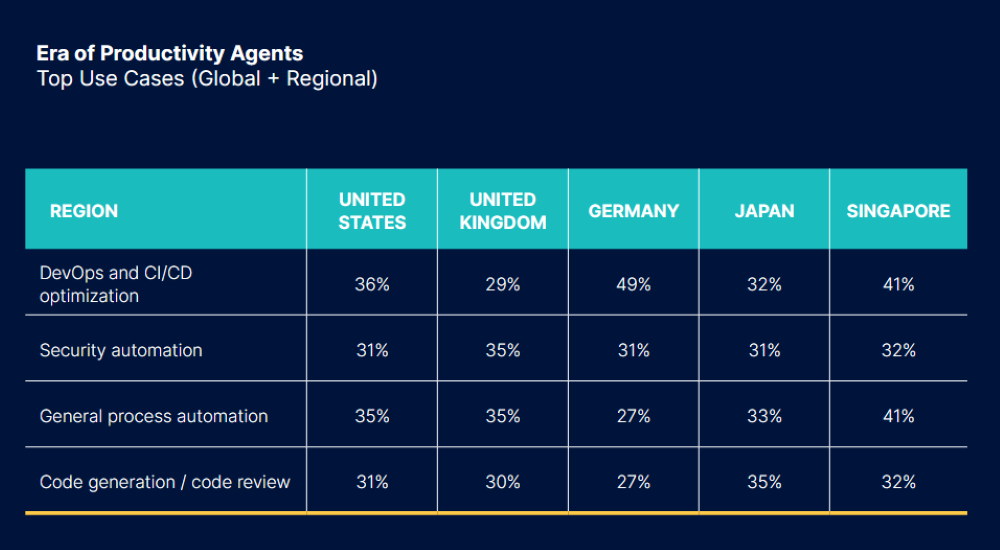
Agent adoption today is driven by a pragmatic focus on productivity, efficiency, and operational transformation, not revenue growth or cost reduction. Early adoption is concentrated in internal, productivity-focused use cases, especially across software, infrastructure, and operations. The feedback loops are fast, and the risks are easier to control.
So what’s holding back agent scaling? Friction shows up and nearly all roads lead to the same place: AI agent security.
AI agent security isn’t one issue it’s the constraint
When teams talk about what’s holding them back, AI agent security rises to the top. In the same survey, 40% of respondents cite security as their top blocker when building agents. The reason it hits so hard is that it’s not confined to a single layer of the stack. It shows up everywhere, and it compounds as deployments grow.
For starters, when it comes to infrastructure, as organizations expand agent deployments, teams emphasize the need for secure sandboxing and runtime isolation, even for internal agents.
At the operations layer, complexity becomes a security problem. Once you have more tools, more integrations, and more orchestration logic, it gets harder to see what’s happening end-to-end and harder to control it. Our latest research data reflects that sprawl: over a third of respondents report challenges coordinating multiple tools, and a comparable share say integrations introduce security or compliance risk. That’s a classic pattern: operational complexity creates blind spots, and blind spots become exposure.
45% of organizations say the biggest challenge is ensuring tools are secure, trusted, and enterprise-ready.
And at the governance layer, enterprises want something simple: consistency. They want guardrails, policy enforcement, and auditability that work across teams and workflows. But current tooling isn’t meeting that bar yet. In fact, 45% of organizations say the biggest challenge is ensuring tools are secure, trusted, and enterprise-ready. That’s not a minor complaint: it’s the difference between “we can try this” and “we can scale this.”
MCP is popular but not ready for enterprise
Many teams are adopting Model Context Protocol (MCP) because it gives agents a standardized way to connect to tools, data, and external systems, making agents more useful and customized. Among respondents further along in their agent journey, 85% say they’re familiar with MCP and two-thirds say they actively use it across personal and professional projects.
Research data suggests that most teams are operating in what could be described as “leap-of-faith mode” when it comes to MCP, adopting the protocol without security guarantees and operational controls they would demand from mature enterprise infrastructure.
But the security story hasn’t caught up yet. Teams adopt MCP because it works, but they do so without the security guarantees and operational controls they would expect from mature enterprise infrastructure. For teams earlier in their agentic journey: 46% of them identify security and compliance as the top challenge with MCP.
Organizations are increasingly watching for threats like prompt injection and tool poisoning, along with the more foundational issues of access control, credentials, and authentication. The immaturity and security challenges of current MCP tooling make for a fragile foundation at this stage of agentic adoption.
Conclusion and recommendations
Ai agent security is what sets the speed limit for agentic AI in the enterprise. Organizations aren’t lacking interest, they’re lacking confidence that today’s tooling is enterprise-ready, that access controls can be enforced reliably, and that agents can be kept safely isolated from sensitive systems.
The path forward is clear. Unlocking agents’ full potential will require new platforms built for enterprise scale, with secure-by-default foundations, strong governance, and policy enforcement that’s integrated, not bolted on.
Download the full Agentic AI report for more insights and recommendations on how to scale agents for enterprise.
Join us on March 25, 2026, for a webinar where we’ll walk through the key findings and the strategies that can help you prioritize what comes next.
Learn more:
- Get your copy of the latest State of Agentic AI report!
- Learn more about Docker’s AI solutions
- Read more about why AI agents challenge existing governance approaches and explore a new framework designed for agentic AI.