

Big, distributed computing systems seldom have visible failures. Most of them start without any bang, frequently with a health-check disconnection, a failed TCP connection or a service port that is no longer listening. Such signals are not too big when considered in isolation. However, in the scenario where systems are running with several hundreds of service instances spread across different regions, these small anomalies can be summed into a continuous flow of operational alerts. This alert traffic may eventually turn into a bullying powerhouse of notable operational noise within infrastructure platforms.
In most production setups, port-down alerts constitute a significant percentage of all paging calls on-call. In other situations, they capture about 35–40% of the total volume of operational alerts. Every alert usually initiates a standard remedying procedure, which involves finding the unhealthy host, triggering processes of swapping instances, allowing provisioning and deployment to run to completion and ensuring that the service is returned to a healthy operational state. The remediation removal is predictable, reliable and repetitive. Engineering teams often repeat the same pattern of actions several times per week.
This repetition prompts an essential operational issue. The need for human intervention is disputed when a remediation procedure can address incidents, and the order of actions is seldom changed. Efforts to find a solution to this problem resulted in the creation of a production-scale self-healing system that could automatically withstand port-down failures. The system saved much in operational toil after 14 months of uninterrupted operation, and at the same time, shortened the time for service recovery.
Reactive Operations and Limitations
In a traditional monitoring system, all instances of a service are measured using some form of periodic health probes. TCP health checks may frequently run every 15 seconds to determine the availability of a service endpoint. The monitoring system can provide a port-down alert when several consecutive probes fail. That is when an on-call engineer, whose job is to initiate investigation and recovery, takes over the incident recovery role.
As usual, historical incident analysis has often demonstrated that there are a small number of general causes of port-down failures. One typical example is the use of a service process that fails or stops responding with some internal failure. A situation where the host itself is no longer accessible due to a hardware failure, kernel problems, or network partition is also classified as an infrastructure failure. The third type is based on incidents of resource exhaustion (out-of-memory condition, file leaks) or port drainage.
Organizations can also develop a number of different variations of port-down alerts to fit in various service roles. Regardless of these differences, the result of the process is mostly the same — the unhealthy case is replaced, and service availability is restored a few minutes later. The fact that such incidents happen repeatedly implies that engineers sometimes do not participate in the process of making a profound diagnosis. Rather, most effort is channeled toward carrying out a familiar recovery process. Such repetitive work has been broadly termed as operational toil, since it eats up engineering time without bringing in new learnings or long-term gains.
An example case of the ineffectiveness of such a strategy is as follows: In a normal operational incident, one of the broker instances in one of the regional clusters failed to respond soon after midnight. The monitoring system raised a port-down alert and the engineer on duty started investigating. The engineer entered the monitoring platform and looked up the affected host, checked system metrics, started replacing instances and waited until the replacement instance passed health checks. Despite the success of the remediation itself, the overall incident time was close to half an hour and some of it was direct human attention. Such cases were frequent, and it was necessary to find a more scalable model of operation.
Figure 1 illustrates a reactive middleware architecture where authentication, encryption, auditing and device management support monitoring and control services.
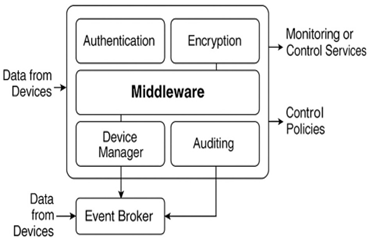
Figure 1: Autonomous Cyber-Physical Security Middleware for IoT — Anomaly Detection and Adaptive Response in Hybrid Environments
Turning Alerts Into Operational Intent
The other automation began with reconsidering the interpretation of the alerts. Rather than considering each port-down event as in effect a signal, a composite operational indicator was implemented. This signal was known as a sustained port exception, taking several failed probes within a particular time span of the same service instance. Using repetitive probe failures for a single operational event, the monitoring system might render a more decisive intention: The instance had probably gone unhealthy, and a replacement would likely be needed to heal the service.
Mainly, automation was not implemented immediately. To make automated recovery actions possible, the alerting pipeline needed further intelligence that would be able to decide, regarding case replacement, whether the act would actually fix a situation. To create such forecasting power, it was necessary to pay close attention to historical working data.
Figure 2 illustrates an automated alert-handling workflow in which GuardDuty findings are routed through EventBridge to Lambda. This architecture transforms security alerts into operational intent, enabling intelligent filtering, decision-making and automated recovery actions instead of relying solely on manual intervention.
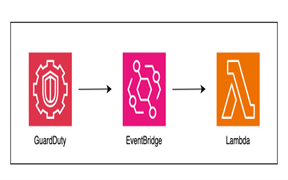
Figure 2: Automating Real-Time Threat Detection, Monitoring and Response in AWS
Deriving SIGNORs of Operation History
The records of historical eventualities spanning about 18 months were analyzed to create a predictive dataset. Over 1,400 port-down cases had been noted during that time. The corresponding incidents were already marked by the respective engineers just after the resolution. Two categories were defined. The first type comprised incidents that were solved by replacing the instance and ended up solving the problem. The second group comprised incidents that had to be investigated further, like in the category of configuration errors, broken deployments and external dependency failures.
The operation of turning incident records into structured inputs of prediction involved the concept of feature engineering. Each alert had 28 extracted features. Temporal features obtained contextual data such as probe-failure duration, time of the day and time since deployment or configuration change. These indicators assisted in capturing the operational circumstances of the incidents.
System metrics also gave more information on host behavior just before the alert. The momentary fluctuations in CPU usage, memory usage, disk I/O wait, open file descriptions and those network connections were gathered. In the case of Java Virtual Machine services, the garbage-collection pause time was also provided, since long pauses are often associated with service unresponsiveness.
The dataset was also richly enhanced with log analysis. The text analysis technique was used to extract common error signatures using the log messages recorded during the 10 minutes before every alert. Predictive signals were identified as keywords such as out-of-memory exceptions, segmentation faults, address-binding failures, connection refusals and circuit breaker activations.
Environmental correlation characteristics were also considered — the number of port-down alerts simultaneously in the same availability zone, same geographic region, or same service role. These characteristics provided some context in the case of simultaneous failures of multiple parts of the infrastructure.
The feature set was finished with historical signals that recognized patterns of past incidents. As an example, a feature was the presence or absence of a previous replacement of an instance covering an incident of the same host and service combination within the prior 30 days.
Model Development and Predictive Performance
An XGBoost-based gradient-boosting classifier was chosen to predict the likelihood of an incident being able to be resolved by using automated instance replacement. This algorithm had a number of benefits such as reliable performance on structured data, training and inferences of high efficiency and the fact that it could be used with interpretability methods.
The training data was composed of about 80% of the labeled incidents, and the other 20% was a chronological hold-out dataset that was meant to mimic real-world operational conditions. The cross-validation by time-series showed good predictive output. Accuracy in identifying incidents that were rightfully classified as automatically recoverable was over 90% and recall was about 80%. The model had also generated an area-under-curve score of approximately 0.96, indicating high discriminable ability.
Critical threshold could only be chosen in the case of operational deployment. A very shy probability cutoff meant that the automated actions were carried out only in case predictive confidence was very high. At the selected threshold, there was an approximation of 96% precision and over 70% recall.
Interpretability was deemed necessary in the development of operational trust. SHAP value analysis explained every prediction by showing which features contributed the most to the model. Notifications about incidents thus contained summary descriptions such as the identification of memory pressure patterns and past success of recoveries to be used as grounds for high confidence in the use of automated replacement.
Continuous learning mechanisms guarantee reliability in the long term. Reviews and labeling of each escalated incident took place after its solution was established. The retrieved model was retrained weekly such that new labeled examples could be added for better predictive accuracy. Any new features were proposed only under the condition of a shadow evaluation phase before they affected automated decisions.
Figure 3 illustrates the XGBoost ensemble model development process, where dataset partitions generate residual-based predictions that are combined for the final results. The framework supports strong predictive performance, interpretable decision-making and continuous retraining to improve automated incident recovery accuracy over time.
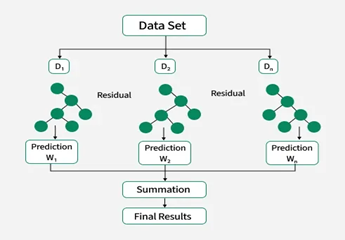
Figure 3: Implementation of XGBoost (eXtreme Gradient Boosting)
Designing the Self-Healing Workflow
Following the adequate predictive reliability demonstrations, the automated recovery workflow was revealed. The design approach focused on simplicity and safety when operating. The event was assessed by the trained classifier when a sustained port exception took place. Automated instance replacement was activated in case the anticipated possibility was above the stipulated threshold.
The automation was based on existing pipelines in the management of infrastructure, instead of defining totally new directions of operation. Terraform-based processes of providing and deploying that were previously done manually were re-used. This strategy reduced the chances of operational risks since the automation was implemented based on procedures that were already set and had been tested.
Separate protection mechanisms were provided to ensure undue consequences. Automated replacements were restricted to a few per logical service group within a specific time window, thus limiting the blast radius. A deduplication mechanism was used to prevent repeats of the same incident. It was integrated with the change-management platform so that it stopped automation during maintenance windows or deployed projects. The analysis of correlation was carried out to track the simultaneous alerts in the infrastructure zones to find out a global failure that does not induce forceful replacement. The last, but most important, automated recovery was declared to be successful only when the monitoring systems ensured that the replacement instance was healthy during the prolonged period of observation.
The workflow is deliberately simple and atomic: Python.
The illustration below shows the self-healing workflow in which monitoring detects failure, Python-based automation evaluates the event and the existing Terraform deployment pipeline safely replaces the unhealthy instance using the same trusted production path already followed by engineers manually.
Figure 4: Self-Healing Workflow Where Python Automation Detects Failure and Triggers Replacement Through the Existing Production-Safe Terraform and Deployment Pipeline
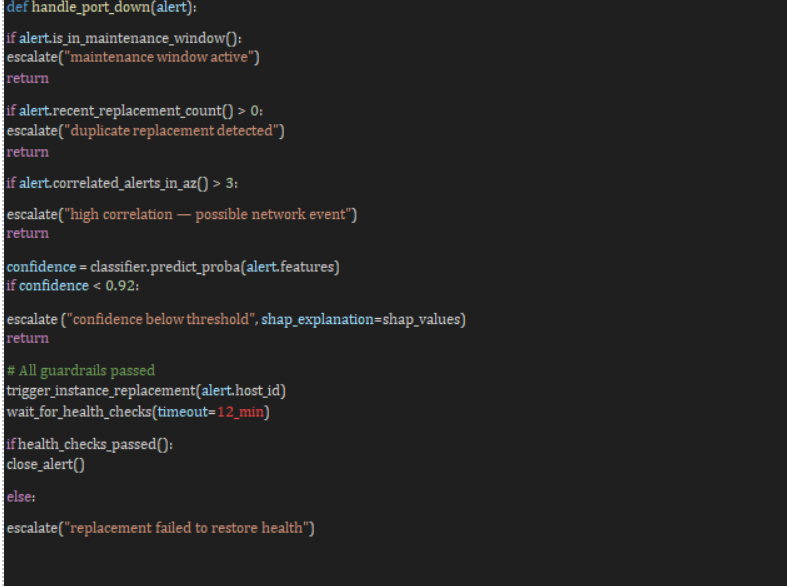
The replacement uses the same production-safe Terraform + deployment pipeline that engineers had been using manually — no new code paths.
Production Operations Experiences
The significance of these safeguards was justified by the incidents of production during the first deployment period. In one instance, a short malfunction in network routing produced dozens of port-down notifications inside a cluster itself. The discovery of correlation decreased the model confidence instantly, avoided automated replacement and escalated the whole situation to human operators. The network problem was soon uncovered, saving the situation of having to be replaced in instances without any benefit.
The other case was the one involving a configuration update that created a startup loop in several services. Making replacements early provided a temporary restoration of availability but the predictive system noticed recurring patterns of failure when replaced and lowered confidence scores. The notification of escalation contained explanatory signals indicating a repeat log signature, and through those, the engine could establish the configured error and rectify it before the problem could extend.
Another incident made model drift known after upgrading the Java runtime environment. The behavioral shift on garbage collection modified the metric patterns, which temporarily decreased predictive accuracy. The retraining process, which is continuous and accompanied by active incident labeling, recovered model performance in a very short time.
Operation Results and Effect
The self-healing system had more than 1,100 port-downs processed after the deployment of 14 months in production. The number of these incidents solved automatically was approximated as 80% without on-call pages. Manual interventions were reduced by a significant margin, and average recovery time also improved a lot. Above all, engineering attention was not focused on routine remediation activities but on more complex incidents that demanded actual investigations and decisions.
The other incidents were usually the dependency failures, deployment errors or infrastructure anomalies that had never been observed before. These cases were highly informative and warranted direct human intervention.
Figure 5 illustrates maintenance strategies divided into proactive and reactive approaches. Proactive maintenance includes preventive and predictive methods, while reactive maintenance relies on failure-based action.
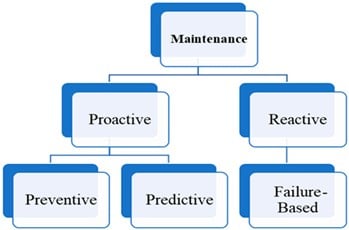
Figure 5: Aircraft Maintenance Strategies
Conclusion: Reliability Self-Healing Infrastructure
Self-operating infrastructure does not presuppose a very complicated AI or organization. This starts by keenly observing operational workflow for caring processes, as one looks forward to identifying patterns and processes where the same corrective actions are used repeatedly. Past data of historical incidents can subsequently be charted into predictive indicators that have the potential to dictate when automated recovery is due.
Integrating explainable ML with strong operational controls allows common operational failures to be dealt with automatically and without harm. The outcome is an infrastructure landscape where breakdowns nevertheless take place, but the recovery is much quicker, more discreet and dependable.
The emphasis of modern reliability engineering is thus not based on responses to accidents but on the creation of designs that can recover autonomously. The advantage of this is not just in enhanced system stability, but also in the recapture of engineering time, allowing technical skill to be devoted to solving the real problems that demand human judgment.