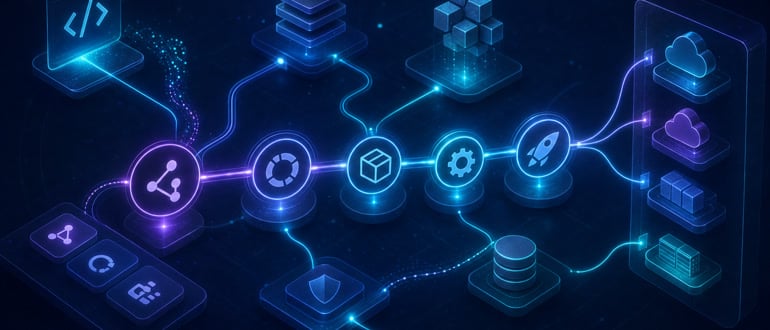

Internal developer platforms have become a tangled web of orchestration tools, CI runners and deployment systems that rarely speak the same language. Every new integration adds another translation layer, and as AI-driven automation starts to plug into those pipelines, the lack of a shared vocabulary for what is actually happening across the software delivery lifecycle becomes a real bottleneck. Without a consistent way to describe build, test and deploy events, both humans and agents are left stitching together logs and webhooks from systems that were never designed to interoperate.
Dadisi Sanyika of the Continuous Delivery Foundation sat down with Mike Vizard to walk through how CDEvents is tackling that fragmentation. CDEvents defines a common event specification — essentially a standardized set of receipts that tools like Jenkins, Tekton and other delivery systems can emit as work moves through the pipeline. That shared semantic layer gives platform teams a reliable way to wire heterogeneous tooling together without writing custom adapters for every combination.
Sanyika digs into Conduit, a project aimed at reducing the integration burden that platform engineers carry when assembling internal developer platforms. Rather than forcing teams to bolt together pipelines, observability and policy tools piece by piece, Conduit leans on CDEvents to provide the connective tissue. He also lays out how natural language interfaces, semantic orchestration and open source interoperability come together to make those platforms more accessible — and more amenable to AI agents that can reason about what is moving through the pipeline.
The bigger payoff is what becomes possible once delivery events are standardized. AI-enabled DevOps platforms can finally act on trustworthy, structured signals rather than improvised log scraping, which opens the door to smarter automation, better feedback loops and developer platforms that adapt instead of calcify. Standards work like this rarely makes headlines, but it is the kind of plumbing that determines whether the next wave of AI tooling in software delivery actually lands.